EAS Security
 EAS Gate
 Security Tag
 EAS Accessories
 Gadgets
 Convex Mirror
 Road Barrier
 Burglar Alarm
 Calling System
Is Every Shift Adequately Staffed? An eHajira Guide to Workforce Coverage
November 04, 2026

Is Every Shift Adequately Staffed? An eHajira Guide to Workforce Coverage
A manager opens the attendance dashboard and sees that most employees have arrived. The shift appears ready to begin. Ten minutes later, the dispatch team discovers that its only available equipment operator is covering another assignment, while customer support has more people than it needs for the opening hour. The attendance figures were useful, but they did not answer the operational question: are the right people available for the work that must happen now?
Workforce coverage means having enough suitably qualified employees available at the right time and location to meet an agreed operational requirement. eHajira can help managers review the employee, attendance, leave, and roster records behind that decision. Its published product information describes attendance summaries and shift roster reporting, while selected plans include shift scheduling and leave management. This guide explains how employers in Bangladesh can use those records alongside their staffing requirements to identify gaps, arrange cover, and review results.
What Does “Adequately Staffed” Mean?
A shift is adequately staffed when its available team can perform the required work under the conditions that apply. The requirement may involve headcount, particular skills, supervisory authority, or access to a shared resource. A warehouse might need enough dispatch staff and an authorized equipment operator. A service desk might need people who can handle routine calls and someone able to resolve escalations. Counting everyone present at the branch does not establish that either team is covered.
Define the requirement before reviewing availability. Specify the time window, location, role, and workload assumption. For example, a dispatch supervisor might plan for six dispatch assistants and one qualified operator between 8:00 a.m. and noon because that is when scheduled vehicles load. This is an illustrative operating requirement, not a universal staffing standard. Another branch with a different workload may need a different team.
The definition should also explain what happens when the requirement cannot be met. A manager may be able to delay a nonurgent task, move a trained employee, or arrange an approved replacement. Where a role is essential to a particular activity, the team may need to pause that activity until a suitable person is available.
Attendance, Availability, and Coverage Are Different
Attendance records show recorded presence or absence under the organization’s configured rules. Availability adds the employee’s assignment, working period, and ability to take on work. Coverage compares the available people with the defined requirement. These are related concepts, but each answers a different question.
An employee may be present and unavailable for reassignment because they are training, handling an urgent customer issue, or working at another site. Someone scheduled for the afternoon shift is part of today’s workforce but cannot fill a morning gap without a confirmed change. A person on approved leave should not remain in the manager’s planned available count merely because their name appears on the original roster.
Use eHajira records to establish the workforce facts the system captures, then confirm operational commitments with supervisors. A punch record cannot establish that a person holds the qualification needed for a task, and a job title alone may not establish current authorization. Where those details are maintained separately, include the relevant skills or authorization register in the review.
Where eHajira Fits in a Coverage Review
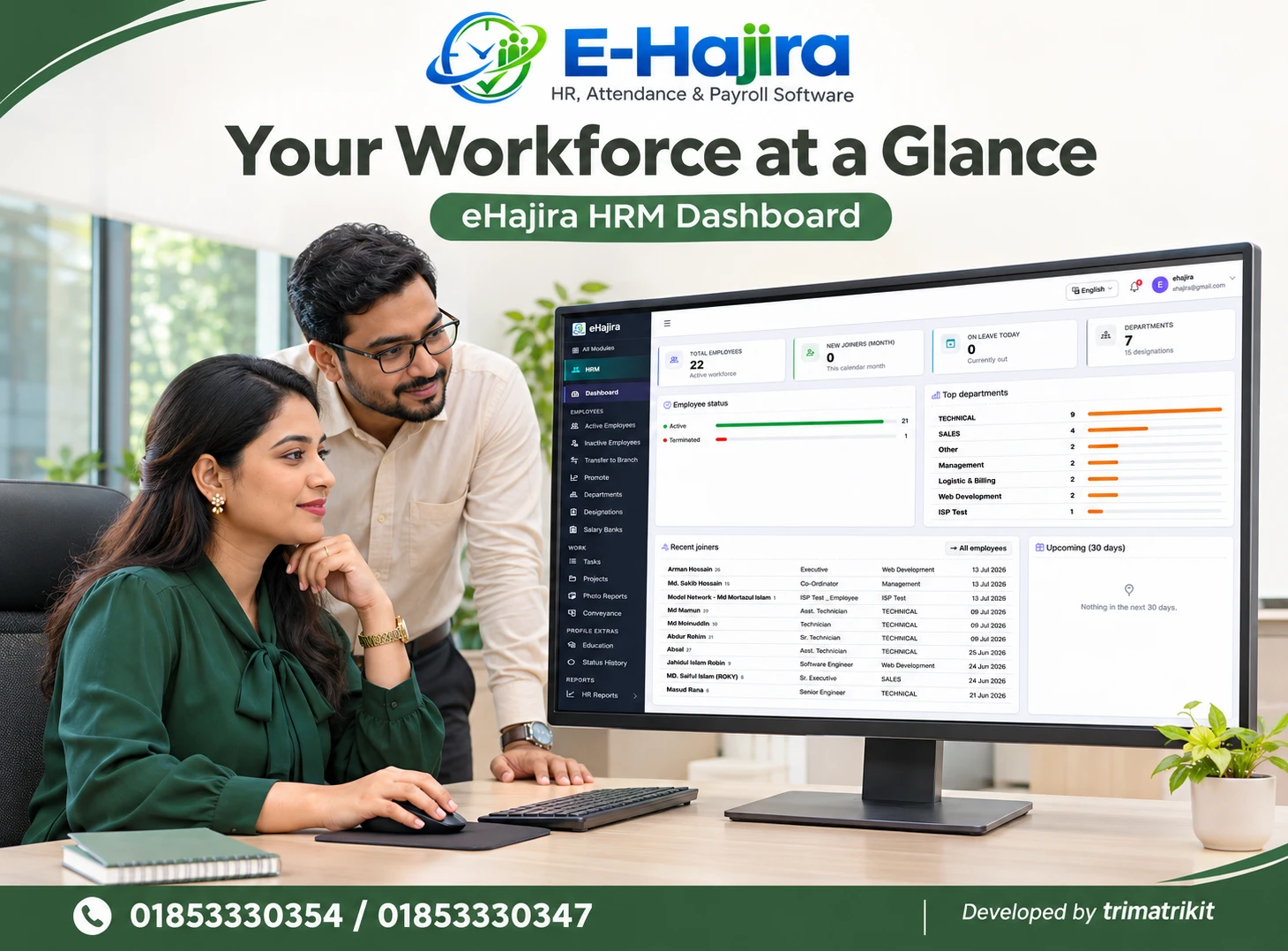
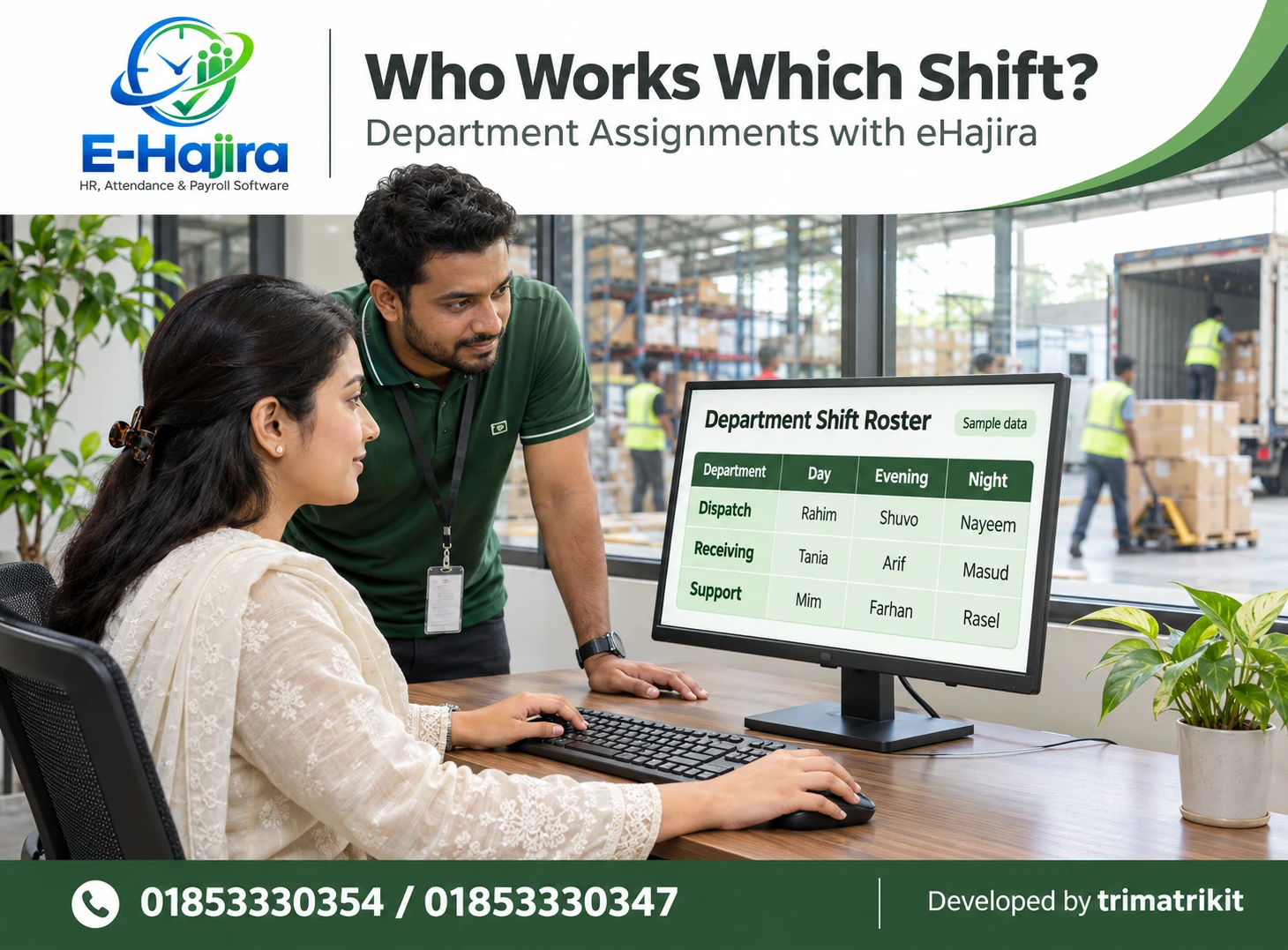
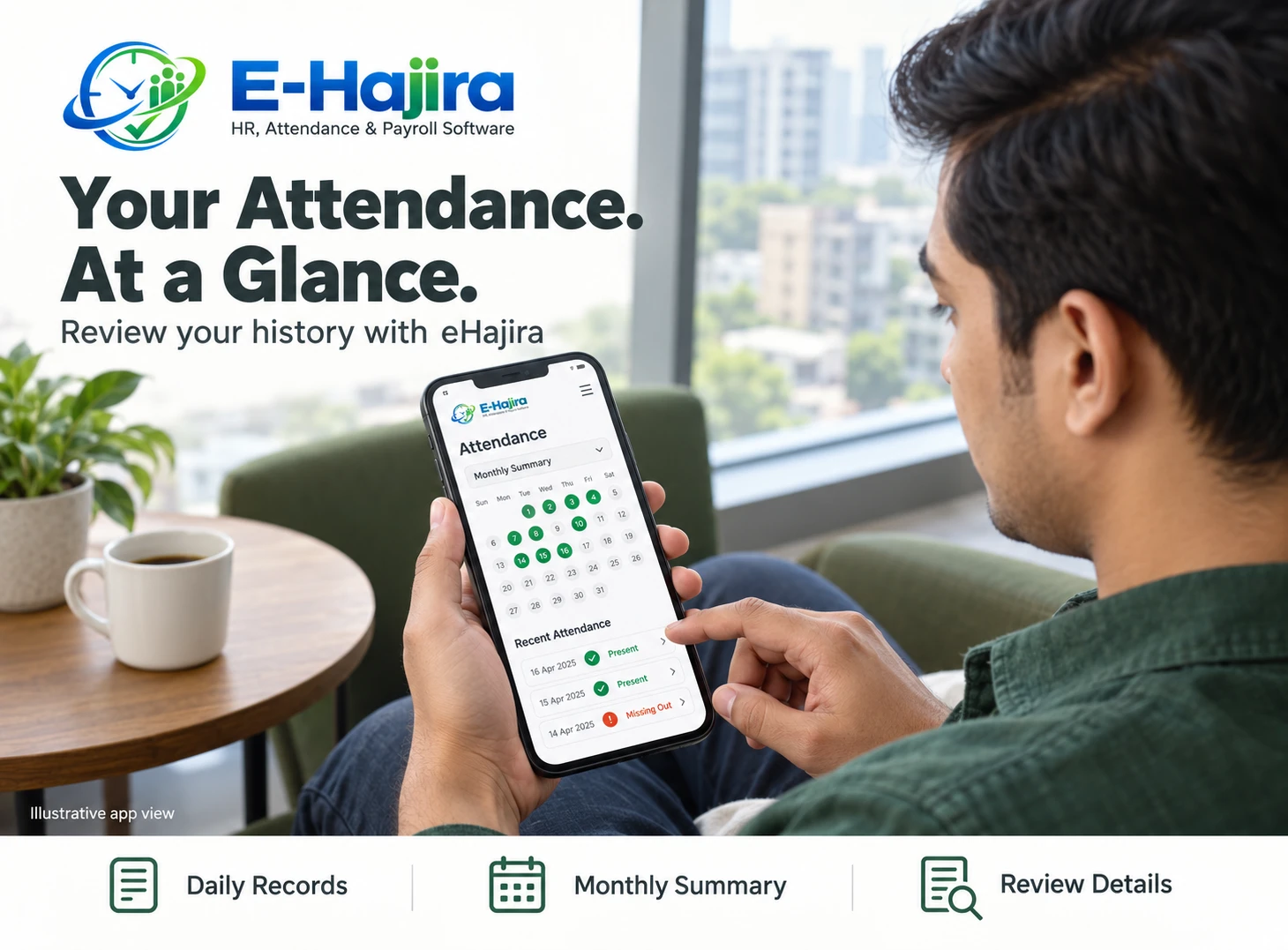
Trimatrik’s published eHajira materials describe an attendance dashboard, employee records, leave handling, and reports organized around workforce information. The catalogue describes a shift roster report showing employee assignments for a period. Selected product plans also list shift and roster management. These capabilities can help a manager compare scheduled staff with attendance and leave records.
A dedicated coverage percentage, automatic shortage alert, skills matching tool, or replacement recommendation was not established by the public materials reviewed for this article. If your organization needs those functions, ask the provider to demonstrate them using your proposed plan. In the meantime, a manager can use verified eHajira reports with an approved staffing requirement sheet to conduct the review.
Before relying on a report, check its date range, branch, shift, and refresh status. A monthly attendance summary can help explain a trend, but it is not enough to confirm who can cover the next two hours. Likewise, a roster prepared last week may need to be reconciled with approved changes before it becomes a reliable starting point for today.
Set a Staffing Requirement for Each Time Window
Begin with the work the team must complete. Identify when it arrives, which tasks can wait, and which roles are needed to perform it. A retail outlet may need more customer-facing employees during its busiest hours and fewer after closing, when reconciliation work remains. A factory may need a particular mix of people during startup, production, and handover. Whole-shift totals can hide these differences.
Translate that work into a requirement the supervisor can review. A useful record identifies the branch, department, time window, role, required number, and owner of the requirement. Review it when the workload or process changes. If an additional production line starts, the staffing assumption should change before the manager begins comparing availability with the old target.
Include breaks and fixed responsibilities in the plan. If four service agents are required to remain available and one of the four takes a break, coverage falls unless another person is assigned. Do not count the same employee as cover for two simultaneous responsibilities. An authorized backup is useful only when their other assignment allows them to respond.
Compare the Roster with Leave and Attendance
Review the upcoming roster before the shift begins. Compare it with approved leave, known training, and other assignments. This is the opportunity to fix planned gaps while there is still time to communicate with staff. If the team needs a replacement, confirm the employee’s availability and the revised assignment rather than assuming that someone who worked the same shift last week will be available again.
At shift opening, reconcile the plan with recorded attendance and supervisor confirmation. Suppose eight employees are scheduled, one is on approved leave, one has not arrived, and one is present but assigned to mandatory training. Only five may be available for the work under review. If the requirement is six, the manager has a gap to resolve. The example is illustrative; the actual count depends on the work and valid assignments.
Treat unresolved attendance separately from confirmed absence. A device connection issue or missing punch may make an employee appear absent even when the supervisor can verify they are working. Identify the exception and follow the correction process. Otherwise, the manager might call in an unnecessary replacement while payroll later receives an inaccurate record.
Calculate Coverage Without Hiding a Critical Gap
A basic headcount coverage percentage divides available staff by required staff and multiplies the result by 100. If a time window requires ten eligible employees and nine are confirmed available, headcount coverage is 90%. This measure is useful when the employees counted are suitable for the responsibilities included.
Calculate critical roles separately. A warehouse can have eleven employees available against a total requirement of ten and still lack its required operator. Reporting 110% coverage for the whole team would conceal that shortage. Show the operator role as uncovered and the other roles against their own requirements.
When required staffing is zero, mark the coverage calculation as not applicable rather than dividing by zero. Explain unusual results instead of relying only on a percentage. A manager needs to know whether a gap lasts fifteen minutes or an entire shift, whether work can be deferred, and who has authority to arrange cover.
Review Workforce Coverage in Bangladesh Businesses
For a manufacturing employer in Gazipur, a practical review might combine the shift roster, attendance exceptions, approved leave, and the team’s qualification record before production begins. If a key operator is unavailable, the manager needs a suitable replacement, not simply another employee from the attendance list. The review can also identify whether the same people repeatedly cover shortages.
A retailer with outlets in Dhaka and Chattogram may compare branch needs before approving a temporary transfer. Someone available at one outlet may lack the required access, local knowledge, or time to travel to the other. Confirm those conditions before reducing one branch’s planned team to support another.
An IT service company in Sylhet might need evening support for a customer account. Its requirement could depend on technical escalation coverage rather than the total number of employees online. A school office may need specific administrative coverage during admission hours while other staff are present for unrelated duties. These are operating examples, not claims about software adoption or measured results.
For all these employers, a useful eHajira demonstration should reflect the real situation: a leave request changes availability, a roster amendment moves an employee, and an attendance exception needs verification. Ask the provider to show how the relevant reports reflect each event.
Arrange Cover Without Moving the Problem
When a gap appears, first confirm what is missing and for how long. Then assess the available options. A trained colleague may be reassigned, a nonurgent task may move, or a suitable employee may be offered an additional assignment under the applicable arrangements. Record who authorized the change and which supervisor owns the revised plan.
Check the effect on the employee’s original team. Moving a support agent to reception may fill one gap while creating another. Compare both requirements before making the change. If someone is covering more than one role sequentially, define the times so each manager knows when the person is available.
Avoid treating overtime as the default solution to every shortage. The ILO’s working-time guidance encourages employers to design schedules that balance organizational needs with workers’ needs. Its research also examines the relationship between working hours, schedules, and work-life balance. These references support reviewing the pattern of cover, not merely filling each immediate vacancy. They do not prescribe a Bangladesh staffing ratio.
Keep Changes Clear for Employees and Payroll
Communicate a revised assignment directly through the organization’s approved channel. State the date, start and end times, location, reporting supervisor, and any handover needed. A change saved in a planning record is not enough if the employee has not received or understood it.
Verify how your eHajira workspace handles roster changes and who can make them. Selected plans publicly describe shift and roster management, but the exact approval, notification, and history controls should be tested in your deployment. Use a sample change to check what the employee, line manager, and HR administrator can see.
Reconcile the actual outcome afterward. A replacement may arrive later than planned or complete a different duration. Preserve the planned assignment and verify actual attendance before payroll processing. Where extra work occurred, investigate it under the applicable working-time and payment rules rather than treating the original roster as conclusive.
Measure Whether Coverage Planning Is Improving
Start with one department for a complete roster cycle. Record uncovered time by role, emergency replacements, unresolved attendance exceptions, and recurring overtime used to fill gaps. Compare similar periods and account for workload changes. A quieter month can make coverage appear better without any improvement in planning.
Discuss repeated gaps with the operational owner. The cause may be unrealistic staffing assumptions, leave concentrated in one period, limited cross-training, or delayed roster updates. Assign a specific action and review date. For example, training an additional backup for one recurring task is a clearer response than telling managers to “improve availability.”
Give managers access to the information needed for their responsibilities. A supervisor assessing availability may need to know that an employee is on approved leave without seeing sensitive supporting details. Share the coverage outcome and required action at the appropriate level, and keep employee records restricted according to the organization’s access policy.
Frequently Asked Questions
1. What is workforce coverage?
Workforce coverage is the extent to which available, suitably qualified employees meet a defined staffing requirement for a particular time and place. It considers the work and required roles as well as headcount.
2. How is coverage different from attendance?
Attendance concerns recorded presence. Coverage asks whether the available team can meet the operational requirement. An employee can be present but committed elsewhere, while a team can have high attendance and still lack a critical skill.
3. Does eHajira have a workforce coverage dashboard?
Published information confirms attendance dashboards and workforce reporting, but a dedicated coverage dashboard was not verified. Ask for a demonstration if you need role-based shortage calculations or a combined coverage view.
4. Which eHajira records are most useful?
Relevant starting points are the roster, attendance, employee records, and approved leave. Use the reports available in your plan, then compare them with your staffing requirement and any separate qualification records.
5. How do managers calculate headcount coverage?
Divide confirmed available employees by required employees for the same time window and role group, then multiply by 100. Ensure that everyone counted is eligible for the work being assessed.
6. Does 100% headcount mean a shift is adequately staffed?
Not necessarily. The team might lack a required operator, supervisor, or other specialist. Check critical roles separately so extra people in one role do not conceal a shortage in another.
7. Who should define the staffing requirement?
The operational manager should define the work and required roles, with input from HR and other relevant functions. Review the requirement when workload, processes, or operating hours change.
8. How often should coverage be reviewed?
Review the upcoming roster early enough to arrange planned cover, confirm it at shift opening, and reassess when circumstances change. Busy operations may also need checks before breaks or handovers.
9. Should employees on approved leave count as available?
They should not be counted as available for their approved leave period. Reconcile the roster with finalized leave information so the plan does not rely on someone who is not expected to work.
10. What should managers do about a missing punch?
Check with the supervisor and follow the attendance correction procedure. Keep the record marked as unresolved until verified rather than automatically treating it as confirmed absence.
11. Can an employee cover two departments?
Only if the assignments and timing are workable. Confirm who has priority, when the employee is available, and whether the original department still meets its own requirement.
12. How should breaks be included?
Assess who remains available during each break window. If a required role becomes uncovered, stagger breaks or arrange a suitable replacement according to the approved working arrangements.
13. Can one branch provide staff to another?
Yes, where qualifications, authority, travel, and scheduling permit. Confirm the transfer with both managers and the employee, then review the remaining coverage at the original branch.
14. How should overnight shifts be reviewed?
Use actual start and end times across both dates. Verify how the roster and attendance records associate the shift with a working day, especially when reviewing midnight gaps or handovers.
15. Can eHajira recommend a replacement automatically?
Automatic replacement recommendations were not established by the materials reviewed. If this is required, ask the provider to demonstrate how the system checks skills, existing assignments, and employee availability.
16. Should overtime be used whenever a gap occurs?
Assess the alternatives and the applicable working arrangements first. Recurring reliance on the same employees can indicate a planning or training issue that needs a more durable solution.
17. Can remote employees count toward coverage?
They can where the work can be performed remotely and they are assigned and available during the required period. Remote presence cannot fill a task that requires someone physically at the site.
18. What should employees receive when their assignment changes?
They need the date, time, location, supervisor, and relevant handover instructions. Confirm the communication through the approved channel so a planning change is reflected in actual attendance.
19. What should a school or business test before rollout?
Test approved leave, a last-minute absence, a roster change, and a critical-role gap. Check the records managers can access and how the final attendance outcome reaches HR.
20. What measures show whether coverage planning is working?
Track uncovered time by role, emergency replacements, recurring gaps, and exceptions requiring correction. Compare periods with similar demand so changes in workload do not distort the result.
21. What information should a line manager see?
Provide the availability and assignment information needed to manage the team. Sensitive leave documents or unrelated payroll details may not be necessary for deciding who can cover a shift.
Begin with a clear requirement for one team and one shift. Compare the planned roster with leave, attendance, skills, and current assignments, then record how any gap is resolved. Use eHajira’s verified workforce records to support that review, and check afterward whether the revised team actually covered the work. Over time, those decisions reveal which shortages are occasional and which require a change in staffing, training, or scheduling.
Recent Post