EAS Security
 EAS Gate
 Security Tag
 EAS Accessories
 Gadgets
 Convex Mirror
 Road Barrier
 Burglar Alarm
 Calling System
From Employee Location to Staffing Decisions: Planning Workforce Allocation with eHajira
November 04, 2026

From Employee Location to Staffing Decisions: Planning Workforce Allocation with eHajira
Managing employees across offices, branches and field locations requires more than knowing who has checked in. Managers also need to understand where work is happening, which employees are available and whether each location has the right people for its responsibilities. Without this coordination, one workplace may struggle with a shortage while another has capacity that could support the wider business.
For organisations in Bangladesh, these challenges can arise in retail networks, distribution businesses, service companies, construction projects and field operations. A supervisor may need an additional technician, a branch may expect higher customer demand, or an employee’s approved leave may create a coverage gap.
eHajira can support the information needed for these decisions through its attendance, employee, leave and scheduling capabilities. The most effective approach combines reliable records with manager judgement. Location information provides context, while staffing decisions require confirmation of skills, workload, travel time and availability.
What Is Location-Based Workforce Allocation?
Location-based workforce allocation means assigning employees to workplaces or service areas according to operational requirements and their suitability for the work. It connects the question “Where is support needed?” with “Who can reasonably provide it?”
A nearby employee may be a possible replacement for an absent colleague. However, proximity alone does not establish suitability. That employee may already be handling an urgent assignment, lack the required training or be approaching the end of a scheduled shift.
A useful allocation process therefore considers location alongside responsibility, competence and working arrangements. For businesses using eHajira, attendance and roster information can contribute to this review, while supervisors confirm the operational details before an assignment changes.
How eHajira Fits into Workforce Planning
eHajira’s published product information describes employee management, branch-wise administration, attendance, leave and reporting. Selected packages also advertise mobile GPS or geo-fenced check-in. Businesses should confirm the features included in their chosen package before designing a location-based workflow.
These capabilities provide inputs for planning. They should not automatically be interpreted as a system that continuously tracks every employee, calculates travel routes or dispatches the nearest qualified worker.
The practical opportunity is to bring relevant workforce information into a more organised review process. Managers can examine records, verify the situation with supervisors and agree on assignments with clearer evidence.
Why This Matters for Businesses in Bangladesh
A Bangladesh business may operate a head office in Dhaka, a warehouse outside the city and sales or service teams in several districts. Each location can have different operating hours, customer expectations and staffing requirements.
Moving an employee between these workplaces involves more than distance. Traffic, transport availability, weather, equipment collection and existing commitments can affect when the employee becomes productive at the destination.
Location-based workforce planning helps managers ask better questions before reallocating people. Instead of assuming that a checked-in employee can immediately support another branch, they can assess whether the move will resolve a shortage without creating another one.
These are operational examples rather than claims that every Bangladesh employer faces identical conditions. The allocation process should reflect the organisation’s actual locations and service model.
Start with Accurate Employee and Branch Records
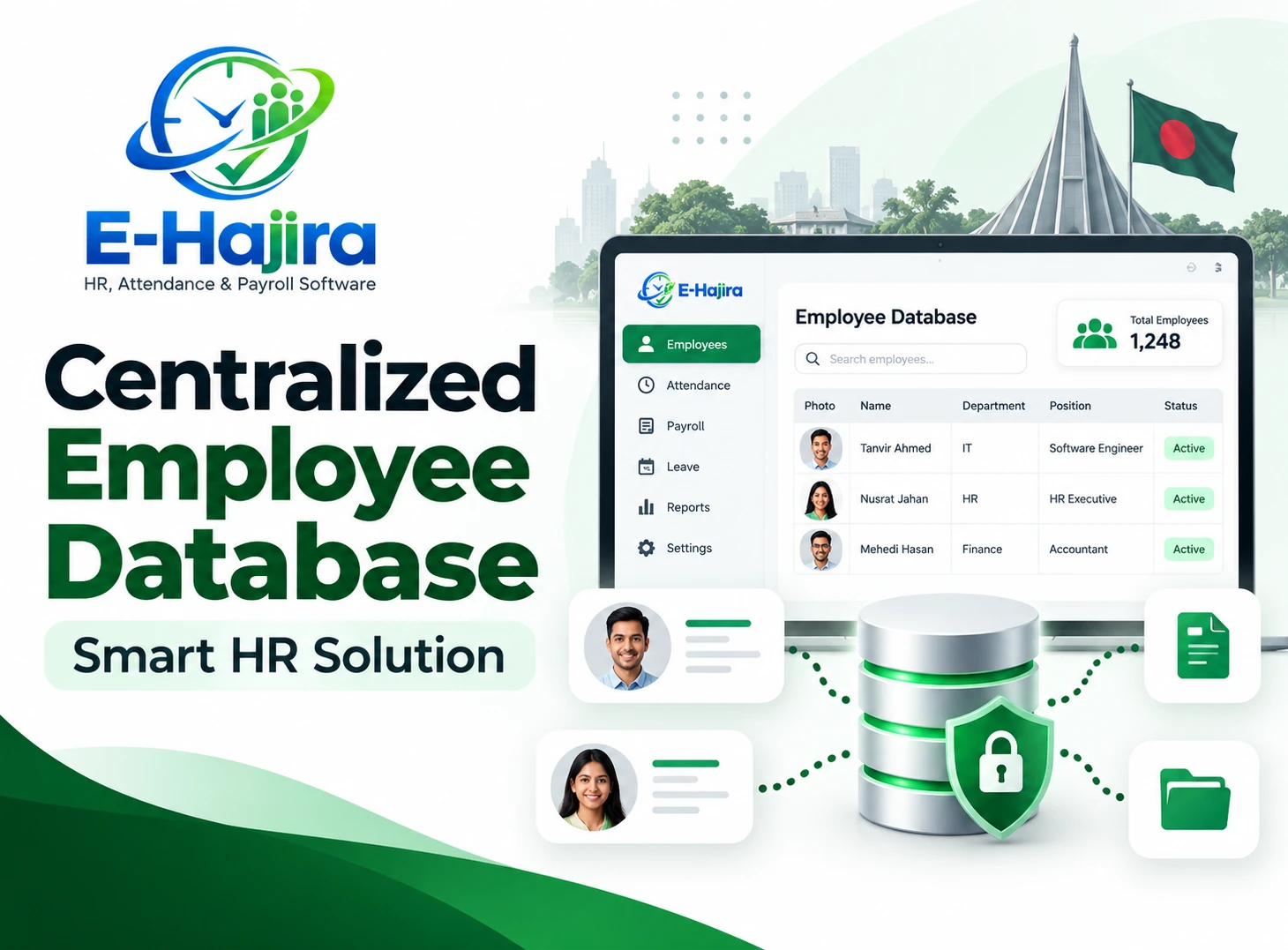
A reliable staffing decision begins with a reliable employee identity. HR should ensure that employees are associated with the correct branch, department and reporting manager.
Similar names, outdated branch assignments and duplicate employee records can make allocation confusing. A manager may believe that someone belongs to a location when the employee has already transferred or changed responsibilities.
Businesses should also distinguish an employee’s permanent branch from a temporary work destination. A short assignment at another site does not necessarily require changing the employee’s permanent employment record.
Where the selected eHajira configuration does not provide a dedicated temporary-assignment field, an approved operational record can document the movement. The essential requirement is that HR and supervisors work from the same understanding.
Define Staffing Requirements Before Reviewing Locations
Managers need to establish what each workplace requires before deciding who should move there. A simple headcount target is rarely sufficient.
A service branch may need a supervisor, two customer-facing employees and a technician. Having four people present would not provide suitable coverage if none could perform the technical work.
Requirements should therefore describe responsibilities and relevant time periods. The opening team may differ from the team needed during a busy afternoon.
This requirement-setting activity is a management responsibility. eHajira records can support comparisons with available employees, but the organisation must first define what adequate coverage means for each location.
Use Rosters to Understand Planned Coverage
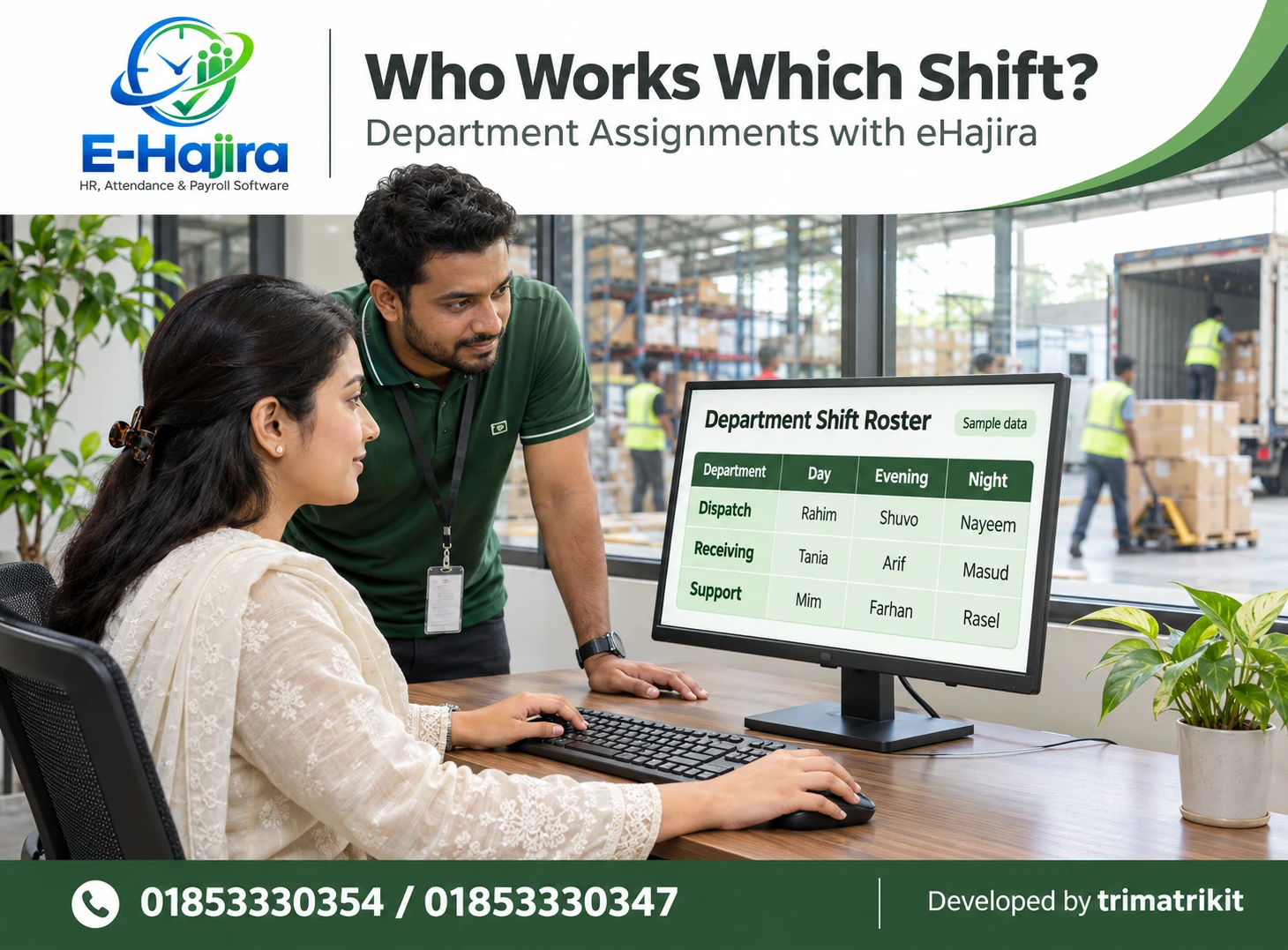
Attendance shows recorded events, while a roster describes the intended working arrangement. Both perspectives matter when reviewing staffing.
An employee who has not checked in may be scheduled for a later shift. Someone present early in the morning may be due to finish before the period requiring additional support.
The developer’s published eHajira roster guidance describes organising shift assignments and connecting schedules with attendance and payroll administration. It also states that availability depends on the package and implementation scope.
Managers should use the relevant schedule as the starting point, then confirm actual availability. A proposed move should account for the employee’s remaining working time and the coverage needed at the original location.
Read Location Information with Its Timestamp
A location record is meaningful only when its timing and collection method are understood. A morning check-in may confirm where an employee started work without showing where the employee is several hours later.
Managers should examine when the record was received and whether it relates to a check-in, a location-sharing event or another supported activity.
GPS information can also be affected by device settings and the surrounding environment. A weak or unusual location reading should prompt verification rather than an immediate conclusion about employee conduct.
For allocation decisions, the safest operational question is whether the employee’s current position and availability have been confirmed recently enough for the proposed assignment.
Separate Presence from Availability
An employee can be present at a workplace and still be unavailable for reassignment. They may be serving a customer, supervising a task or performing work that cannot be interrupted.
Similarly, an employee who appears absent from an attendance report may have a missing punch or a delayed record. Treating that person as unavailable without checking could lead to unnecessary staffing changes.
Managers should combine recorded presence with a supervisor’s confirmation of workload. This prevents attendance information from carrying a meaning it was not designed to establish.
The same distinction protects service continuity. Reallocating someone should create useful capacity at the destination while preserving essential responsibilities at the original location.
Consider Skills and Equipment Before Distance
The nearest employee is not always the best employee for an assignment. A technician may need specific experience, access credentials or tools.
A worker who is slightly farther away but properly equipped may complete the task sooner than someone nearby who must collect equipment or request assistance.
Businesses should maintain an understandable record of employees’ relevant capabilities. If eHajira’s available profile fields do not capture every required qualification, a controlled skills register can supplement the review.
The objective is a practical staffing decision based on capability and readiness. Location narrows the options; it should not replace the assessment of whether the employee can perform the work.
An Illustrative Branch Allocation Scenario
Consider a company with an Uttara service office and a customer-support location in Mirpur. Mirpur expects a busy afternoon, but one scheduled employee has approved leave.
The supervisor identifies a requirement for an additional trained support employee between 2:00 PM and 5:00 PM. HR reviews the relevant schedule and attendance information, then asks the Uttara supervisor whether a suitable employee can be released.
The employee’s current task, travel arrangements and expected arrival time are confirmed. Management also checks whether Uttara will retain adequate coverage.
Only after those questions are resolved does the temporary assignment proceed. This is an illustrative management workflow, rather than a claim that eHajira automatically performs each decision or approval.
Coordinate Leave with Staffing Decisions
Leave information should influence planning before the working day begins. An approved absence creates a known requirement that managers can address earlier.
A branch may appear adequately staffed on its normal roster while several employees have approved leave for the same period. Reviewing these records separately can hide the gap.
HR and supervisors should agree on when upcoming leave is reviewed against operational requirements. The organisation should also define how last-minute absences are communicated.
Employees should not be assumed available simply because they are geographically close to a workplace. Approved leave and other established arrangements remain relevant when considering any assignment.
Make Temporary Assignments Clear
A reassigned employee needs clear instructions about where to report, when the assignment starts and who will supervise the work.
The receiving manager should understand the employee’s responsibilities and expected arrival. The original manager should know how long the employee will be away.
These details can be recorded through the available approved process. Businesses should confirm whether their eHajira implementation supports the desired assignment notes, notifications or approval steps before relying on them.
Clear communication reduces conflicting instructions. It also gives HR a useful reference if attendance records later need to be reviewed against the temporary working arrangement.
Handle Attendance Exceptions Fairly
A change of workplace can create an attendance exception. An employee may be asked to report somewhere outside their normal authorised check-in area.
Before the move, HR should clarify how attendance will be recorded at the destination. The employee should know whom to contact if the expected method fails.
A location mismatch should not automatically be treated as misconduct when a supervisor has authorised the assignment. The records and instructions need to be reconciled.
Organisations should test these situations during implementation. An ordinary working-day demonstration is insufficient if employees regularly move between branches or visit temporary sites.
Keep Payroll Review Connected to the Assignment
Temporary allocation can affect the information needed for payroll review, including recorded hours and approved work arrangements.
The move itself does not establish entitlement to a particular allowance or payment. HR must apply the employment terms, company policy and applicable requirements relevant to the situation.
Managers should document the actual arrangement clearly enough for payroll staff to understand it. That includes any approved change in schedule and the supporting attendance record.
Location information should support verification. It should not become the sole basis for deductions or additional payment without reviewing the wider evidence and the employee’s explanation where necessary.
Protect Employee Trust
Employees should understand why location information is collected and how it contributes to operational decisions.
A clear policy can explain when location is recorded, who may access it and how an employee can report an inaccurate record. Collection should remain connected to a defined business purpose.
Managers also need guidance. A location record should not be casually shared in unrelated groups or used to make unsupported judgements about performance.
During implementation, businesses should verify the access controls and retention arrangements available in their deployment. Trust is easier to maintain when employees receive a practical explanation and supervisors apply the process consistently.
Measure Whether Allocation Improves Operations
Businesses should evaluate workforce allocation through operational outcomes. Useful questions include whether critical responsibilities were covered and whether customer work was completed on time.
Management can also review how often emergency reassignment occurs. Repeated movement to the same location may indicate a permanent staffing requirement or an unrealistic roster.
These measures may require combining attendance information with service records and manager observations. A single attendance report cannot explain every operational outcome.
The aim is to improve planning progressively. If reassignment repeatedly disrupts the original branch, the organisation should revise its approach rather than treating employee movement as an achievement by itself.
Introduce the Process through a Pilot
A practical rollout can begin with two branches or one field team. HR should define the staffing problem, agree on responsibilities and test the relevant records.
The pilot should include a normal assignment, a leave-related shortage and an attendance exception. Managers should check whether employees receive clear instructions and whether the resulting records can be understood afterwards.
Any gaps can then be addressed through configuration, training or an agreed supporting process.
This approach helps businesses establish how eHajira contributes to their own operations before extending the workflow across every location.
Frequently Asked Questions
1. What does location-based workforce allocation mean?
It means planning employee assignments according to workplace requirements, location and suitability. A sound decision also considers skills, workload, schedules and the effect on the employee’s existing responsibilities.
2. How can eHajira support this process?
Relevant employee, attendance, leave and roster information can support management review. The precise workflow depends on the selected package and configuration, so businesses should demonstrate their requirements before implementation.
3. Does eHajira automatically assign the nearest employee?
The sources reviewed do not establish automatic nearest-worker dispatch. Managers should treat allocation as a supervised decision unless that specific capability has been demonstrated and included in their implementation.
4. Is GPS check-in the same as continuous tracking?
No. A check-in records information associated with an event. Continuous tracking involves a different collection process. Businesses should confirm exactly what their configured app records and when it records it.
5. Can a location record confirm that an employee is free?
No. The employee may already be working on an assignment. Current workload and availability should be confirmed with the employee or supervisor before responsibilities change.
6. Why should managers check the location timestamp?
An older record may no longer represent the employee’s position. The timestamp helps managers judge whether they need a fresh confirmation before planning travel or assigning work elsewhere.
7. Can small businesses use this approach?
Yes. A business with two locations can benefit from clearer staffing decisions. It can begin with accurate employee records, agreed responsibilities and a simple process for confirming temporary assignments.
8. How should businesses decide minimum staffing?
They should identify the roles required for each operating period. Minimum staffing should reflect necessary skills and responsibilities, rather than relying only on a total number of employees.
9. Can employees move between branches temporarily?
Temporary assignments can form part of an organisation’s operating process. Management should confirm the destination, timing, supervision and attendance method, then record the arrangement through an approved channel.
10. Should a temporary assignment change the permanent branch?
Not necessarily. Permanent employment records and short assignments serve different purposes. HR should decide how to document the temporary arrangement without creating misleading historical employee information.
11. How does leave affect workforce allocation?
Approved leave reduces planned availability. Reviewing leave alongside the roster allows managers to identify coverage needs earlier and arrange support before a shortage interrupts work.
12. What if GPS information appears inaccurate?
The employee should have a way to report the problem. Supervisors should examine the timestamp, device conditions and assignment context before drawing conclusions or changing attendance records.
13. Is the closest employee always the best replacement?
No. Another employee may have more suitable training, equipment or remaining working time. Distance should be considered alongside the practical requirements of completing the assignment.
14. What happens when internet connectivity is unavailable?
Businesses should follow a tested fallback process. They should confirm whether their deployment supports delayed submission or another method, and avoid assuming that an offline capability is included without verification.
15. Can location information determine payroll deductions?
Location alone provides incomplete evidence. Payroll review should consider the authorised assignment, attendance records, relevant policy and any necessary explanation before a deduction decision is made.
16. Who should approve a reassignment?
The organisation should define approval responsibility. Typically, the original and receiving supervisors need coordination, while HR may review record changes and other implications under the company’s established process.
17. How can managers avoid double-booking employees?
They should check existing assignments and obtain confirmation before issuing new instructions. A clear owner for each allocation decision helps prevent different supervisors from assigning the same employee simultaneously.
18. What should employees know before travelling?
They should know the destination, reporting time, purpose, supervisor and expected assignment duration. Attendance instructions and any agreed travel arrangements should also be clear before departure.
19. How can businesses evaluate the results?
They can examine coverage gaps, service completion and repeated emergency moves. Comparing outcomes over time helps determine whether allocation improves operations or merely shifts shortages between locations.
20. What should a company request during an eHajira demonstration?
It should demonstrate its actual branch structure, shifts and mobile attendance needs. A realistic temporary-assignment example can reveal whether configuration or a supporting process is required.
21. What is the best starting point?
Start with reliable records and one clearly defined staffing problem. Test the workflow with a limited team, review the evidence and expand after employees and supervisors understand their responsibilities.
Turn Workforce Information into Better Decisions
Location-based workforce allocation works best when information leads to a clear operational decision. Knowing where an employee checked in is useful, but effective deployment also requires understanding what the employee can do and whether they can leave their current responsibilities.
For Bangladesh businesses using eHajira, the opportunity is to connect workforce records with a disciplined planning process. HR maintains reliable information, supervisors confirm working conditions, and managers approve assignments that address genuine needs.
To discuss an eHajira workflow for your branches and field teams, contact 01853330354 / 01853330347 and request a demonstration based on your organisation’s staffing scenarios.
Recent Post